Your child’s first tooth is an exciting milestone, but it also marks the beginning of a new responsibility: looking after their dental health.
One of the questions parents commonly ask is when their child should start going to the dentist. You might assume there is little reason to visit until your child has most of their baby teeth or is old enough to understand what is happening.
In reality, dental visits should begin much earlier.
Taking your child to the dentist from a young age allows their teeth and gums to be monitored as they develop. Just as importantly, it gives your child an opportunity to become familiar with visiting the dentist before they associate dental appointments with having a problem.
In this guide, we explain when your child’s first dental visit should take place, why those early appointments matter and what you can do at home to give their teeth the healthiest possible start.
When Should a Child First Go to the Dentist?
The NHS recommends taking your child to the dentist when their first milk teeth appear.
For many babies, the first tooth appears at around six months of age, although every child develops differently and teeth can appear earlier or later.
You do not need to wait until your child has a full set of teeth.
Even if there is only one tiny tooth to examine, an early dental appointment provides an opportunity to check your child’s oral development and gives parents useful advice about brushing, fluoride, diet and preventing tooth decay.
When Do Babies Start Getting Teeth?
Most babies develop their first milk tooth at around six months old, although there is considerable variation between children.
Some babies start teething earlier, while others may not develop their first tooth until later.
The lower front teeth are often among the first to appear, followed gradually by the other front teeth, canines and molars.
Most children will eventually develop 20 milk teeth.
There is usually no reason to worry if your baby’s teeth appear slightly earlier or later than expected. If you have concerns about your child’s dental development, your dentist can assess their mouth and provide personalised advice.
Why Should Children Visit the Dentist So Young?
Your child’s earliest dental appointments are primarily about prevention.
A young child may not need any dental treatment at all. Instead, early appointments allow the dentist to monitor how their mouth is developing and help parents establish good habits from the beginning.
Starting early also means the dental practice becomes a familiar environment.
Rather than your child’s first experience of a dentist happening because they have toothache or another problem, they can gradually become accustomed to the sights, sounds and experience of routine appointments.
This can help build a positive relationship with dental care that continues as they grow.
Why Are Baby Teeth So Important?
It can be tempting to think that baby teeth are less important because they eventually fall out. However, they perform several important functions during childhood.
Healthy baby teeth help children:
- Chew and enjoy a varied diet
- Develop clear speech
- Smile with confidence
- Maintain space for developing permanent teeth
- Support normal development of the jaws and mouth
Tooth decay in baby teeth can cause pain and infection, so prevention should begin as soon as the first tooth appears.
Looking after baby teeth also helps children establish habits that can protect their permanent teeth later in life.
What Happens at Your Child’s First Dental Visit?
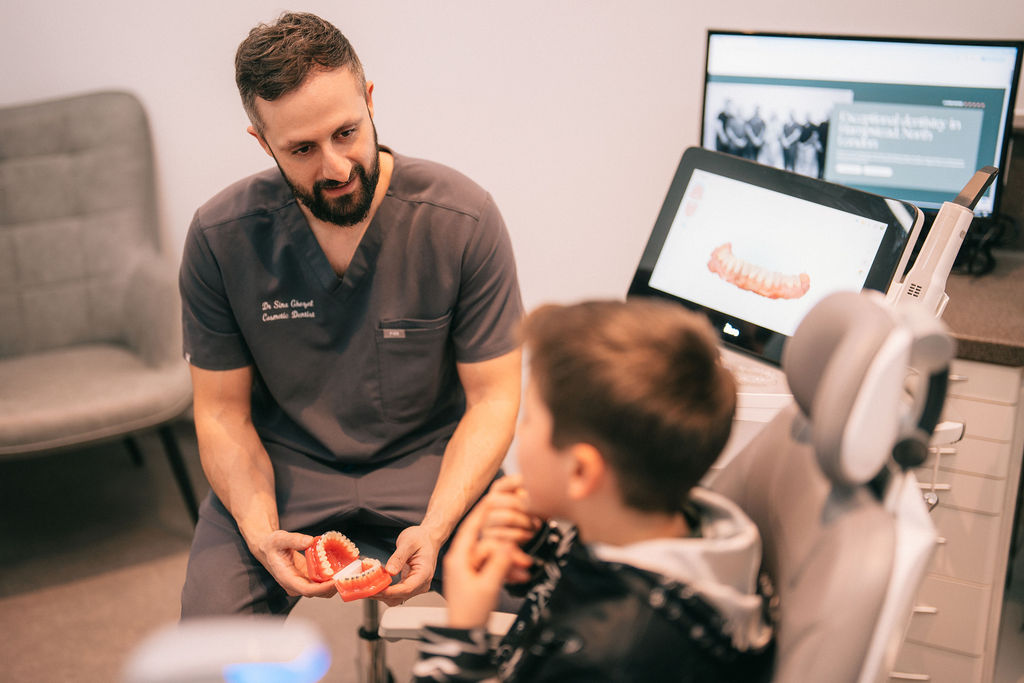
Your child’s first visit is usually simple and relaxed.
The exact appointment will depend on their age, confidence and how many teeth they have. There is no expectation that a very young child will immediately sit perfectly still while having a complete dental examination.
The aim is to introduce them gradually to the dental environment.
Where possible, the dentist may look at your child’s:
- Teeth
- Gums
- Jaw development
- Bite
- Tooth eruption
- General oral development
The dentist will also look for any early signs of tooth decay or other concerns.
For parents, the appointment provides an opportunity to ask questions and receive personalised advice about brushing, fluoride, teething, diet, bottles, dummies and other habits that could affect your child’s teeth.
What If My Child Will Not Open Their Mouth?
Do not worry if your child is reluctant during their first visit.
Some children will happily open their mouths and allow the dentist to look at their teeth. Others may be shy, nervous or simply uninterested.
That does not mean the appointment has been unsuccessful.
Becoming familiar with the dental practice, meeting the dental team and learning that a dental visit is nothing to fear can itself be valuable.
Future appointments can build on that experience as your child’s confidence develops.
How Can I Prepare My Child for Their First Dental Visit?
How you talk about the dentist can influence how your child feels about their appointment.
Try to keep conversations simple and positive. Explain that the dentist is going to look at their teeth and help keep them healthy.
Avoid introducing ideas they may not have considered. For example, telling a child that something will not hurt can sometimes make them wonder why pain was mentioned in the first place.
You can also prepare your child by:
- Reading children’s books about visiting the dentist
- Playing dentist at home
- Letting them practise opening their mouth
- Allowing them to bring a favourite comfort item
- Choosing an appointment time when they are usually rested
- Talking positively about looking after their teeth
It is also helpful for parents to remain relaxed. Children can pick up on anxiety, particularly if a parent has had difficult dental experiences themselves.
When Should You Start Brushing Your Baby’s Teeth?
Start brushing as soon as your baby’s first tooth appears.
Brush twice each day, including the last thing before bed and on one other occasion.
At first, you may only be brushing one or two tiny teeth. The important thing is both removing plaque and establishing toothbrushing as part of your child’s normal daily routine.
Young children need help with brushing because they do not yet have the manual dexterity required to clean every surface effectively.
Parents or carers should continue helping and supervising their child’s brushing until at least the age of seven.
What Toothpaste Should Children Use?
Children should brush using fluoride toothpaste because fluoride helps strengthen tooth enamel and protect against tooth decay.
For children under three, use a smear of toothpaste containing at least 1,000ppm fluoride.
For children aged three to six, use a pea sized amount of toothpaste containing at least 1,000ppm fluoride.
Children should be encouraged to spit out excess toothpaste after brushing rather than rinsing their mouth with water. This allows fluoride to remain on the teeth for longer.
Your dentist can recommend the most appropriate toothpaste if your child has an increased risk of tooth decay.
How Can You Help Prevent Tooth Decay in Young Children?
Tooth decay can begin once teeth appear, so prevention should start early.
Some of the most important steps parents can take include:
- Brushing your child’s teeth twice daily
- Using an age appropriate fluoride toothpaste
- Brushing last thing before bed and on one other occasion
- Limiting how frequently sugary foods and drinks are consumed
- Choosing water and milk as everyday drinks
- Avoiding sugary drinks in bottles
- Encouraging children to drink from an open or free flowing cup as they grow
- Taking your child for regular dental appointments
It is not only the amount of sugar that matters. How frequently teeth are exposed to sugar is also important because each exposure allows bacteria in the mouth to produce acids that attack tooth enamel.
Can Bottles Affect a Baby’s Teeth?
What you put in your child’s bottle matters once teeth begin appearing.
Frequent exposure to sugary drinks can increase the risk of tooth decay, particularly if a child regularly drinks from a bottle over a prolonged period.
For babies being bottle fed, bottles should contain breast milk, infant formula or water as appropriate.
As your child grows, introducing drinking from an open or free flowing cup can help move them away from prolonged bottle use.
If you are unsure about feeding habits and your child’s teeth, your dentist can provide personalised advice.
What About Teething?
Teething often begins at around six months, although timing varies considerably between children.
Your baby may become more unsettled, chew objects or develop sore gums as their teeth begin to emerge.
The arrival of the first tooth is also your reminder to begin brushing and arrange their first dental visit.
If you notice anything unusual about your child’s developing teeth or are concerned about their mouth, ask your dentist for advice.
What About Dummies and Thumb Sucking?
Sucking is a natural reflex for babies, and using a dummy or sucking a thumb is common during early childhood.
For most young children this is not immediately a cause for concern. However, prolonged sucking habits can affect how the teeth and jaws develop.
If your child continues sucking their thumb or using a dummy as they get older, your dentist can monitor their dental development and advise you about when it may be appropriate to discourage the habit.
Regular dental appointments provide an opportunity to identify any changes to the bite or position of the developing teeth.
When Do Children’s Adult Teeth Start Appearing?
Children generally begin losing their milk teeth and developing permanent teeth from around six years of age, although timing varies.
An important development around this age is the appearance of the first permanent molars.
These teeth erupt towards the back of the mouth and do not replace a baby tooth. This means parents may not immediately realise that they are permanent teeth that need to last throughout adulthood.
Careful brushing around newly erupted permanent teeth is particularly important because their grooves can trap food and plaque.
Your dentist can monitor how your child’s permanent teeth are developing during routine appointments.
How Can a Dentist Help Protect Your Child’s Teeth?
Dental appointments are not only about identifying existing problems.
Preventative dental care can help reduce your child’s risk of tooth decay and support healthy dental development as they grow.
Depending on your child’s age and individual needs, preventative care may include:
- Fluoride varnish to help strengthen tooth enamel
- Fissure sealants to help protect the grooves of permanent back teeth
- Advice about brushing and oral hygiene
- Dietary advice to help reduce the risk of decay
- Monitoring the development and alignment of the teeth
- Regular assessment of the teeth and gums
Your dentist will recommend appropriate preventative care based on your child’s individual oral health.
What If My Child Is Already Older and Has Never Been to the Dentist?
There is no need to feel that you have left it too late.
Arrange an appointment now.
The dentist can check your child’s teeth, gums, bite and development and identify anything that may need attention.
The focus should be on creating a positive experience and establishing good dental habits from this point onwards.
It is much better to start later than not to start at all.
How Often Should Children Go to the Dentist?
There is no single appointment interval that is appropriate for every child.
How frequently your child should visit depends on factors including their:
- Age
- Oral health
- Dental development
- Risk of tooth decay
- Previous dental problems
Your dentist will recommend an appropriate recall interval based on your child’s individual needs.
Children who have a higher risk of tooth decay or need closer monitoring may be advised to attend more frequently.
When Should You Take Your Child to the Dentist Before Their Next Check Up?
Routine appointments are important, but you should not wait for the next scheduled visit if something concerns you.
Contact your dentist if your child develops:
- Toothache or persistent dental pain
- Swelling around a tooth or gum
- A broken, chipped or damaged tooth
- Dark, white or unusual patches on a tooth
- Persistent bleeding or swollen gums
- Sensitivity when eating or drinking
- A dental injury
- Any changes to their teeth or mouth that concern you
Early assessment can often identify the cause before the problem becomes more difficult to manage.
Helping Children Feel Comfortable at the Dentist
Positive early experiences can make a significant difference to how children view dental care later in life.
At Rosslyn Hill Dental Clinic, we understand that every child is different. Some children are naturally curious and confident, while others need more time to become comfortable.
We take a gentle approach and explain things in languages children can understand. Where appropriate, children can become familiar with the dental environment gradually rather than feeling pressured.
The aim is not simply to look after their teeth today. It is to help children develop confidence in looking after their oral health as they grow.
Give Your Child’s Smile the Best Possible Start
You do not need to wait until your child has all their baby teeth before introducing them to the dentist.
Starting dental visits when the first milk teeth appear allows your child’s oral development to be monitored from an early age, gives parents access to personalised preventative advice and helps make visiting the dentist a normal part of growing up.
Alongside regular dental care, brushing twice daily with fluoride toothpaste, limiting frequent sugar exposure and establishing healthy habits can give your child a strong foundation for lifelong oral health.
At Rosslyn Hill Dental Clinic, we provide gentle dental care for children of all ages in Hampstead. To find out more about appointments, preventative care and how we support younger patients, visit our Children’s Dentistry in Hampstead page or contact our team to arrange your child’s appointment.
Frequently Asked Questions About Children’s Dental Visits
Should my baby go to the dentist even if they only have one tooth?
Yes. Once the first milk tooth appears, it is a good time to start taking your child to the dentist. The appointment also gives parents an opportunity to receive preventative advice about caring for their child’s developing teeth.
What age do babies normally get their first tooth?
Many babies develop their first tooth at around six months, but there is considerable variation. Some develop teeth earlier while others get their first tooth later.
My child is one and has no teeth. Should I be worried?
Children develop at different rates, so having no teeth by the first birthday does not necessarily mean something is wrong. If you are concerned about your child’s dental development, speak to your dentist or health visitor for advice.
Do baby teeth really matter if they eventually fall out?
Yes. Baby teeth help children eat and speak and maintain space for the permanent teeth developing underneath. Tooth decay in baby teeth can also cause pain and infection.
How often should I brush my baby’s teeth?
Brush your child’s teeth twice daily from the moment their first tooth appears. One of those times should be last thing before bed.
How much toothpaste should my child use?
Children under three should use a smear of fluoride toothpaste. Children aged three to six should use a pea sized amount.
At what age can children brush their own teeth?
Children can gradually become more involved in brushing their teeth, but parents or carers should help or supervise until at least seven years of age.
What if my child is scared of the dentist?
Tell the dental team before the appointment. A gentle introduction to the dental environment without pressure can help children gradually become more confident. Keeping conversations about dental appointments positive at home can also help.
Does my child need treatment at their first dental appointment?
Usually the emphasis is on examination, prevention, familiarisation and advice rather than treatment. If the dentist identifies a dental problem, they will explain what they have found and discuss the appropriate next steps.